Sound Absorber
Designed from bio-based materials
Introduction
This study focuses on developing sustainable materials derived from renewable resources, highlighting the technical properties of horse chestnuts and their application in creating acoustic panels. The project addresses sustainability concerns by using materials that can be reintegrated into the circular economy and critically reflects on the limitations of bio-based materials.
Background
This project was part of my bachelor thesis in product design at Malmö University, where I aimed to develop a sound-absorbing panel from bio-based, renewable materials, including horse chestnuts, hemp, and wool. By utilizing local and sustainable resources, the goal was to showcase the potential of bio-materials in interior design, addressing environmental concerns through material choices that are fully recyclable and biodegradable.
Tinkering
The ideation process began with experimenting with different bio-based materials. I tinkered with various combinations of fibers, eventually discovering that horse chestnuts and hemp provided the ideal balance of acoustic dampening and material rigidity. Through sketching and early prototypes, I explored various design possibilities, ensuring that the materials could be molded effectively into sound panels. The process included numerous iterations, testing combinations of fibers, and optimizing their density and form for optimal sound absorption.
User Testing
User testing was conducted in collaboration with potential users, focusing on the panels’ aesthetic appeal and acoustic performance. Participants were invited to evaluate the panels in various interior settings to assess their ability to reduce noise and enhance comfort. Feedback from these sessions informed design refinements, such as adjusting the panel’s thickness, improving its surface texture, and ensuring easy installation.
Final Product
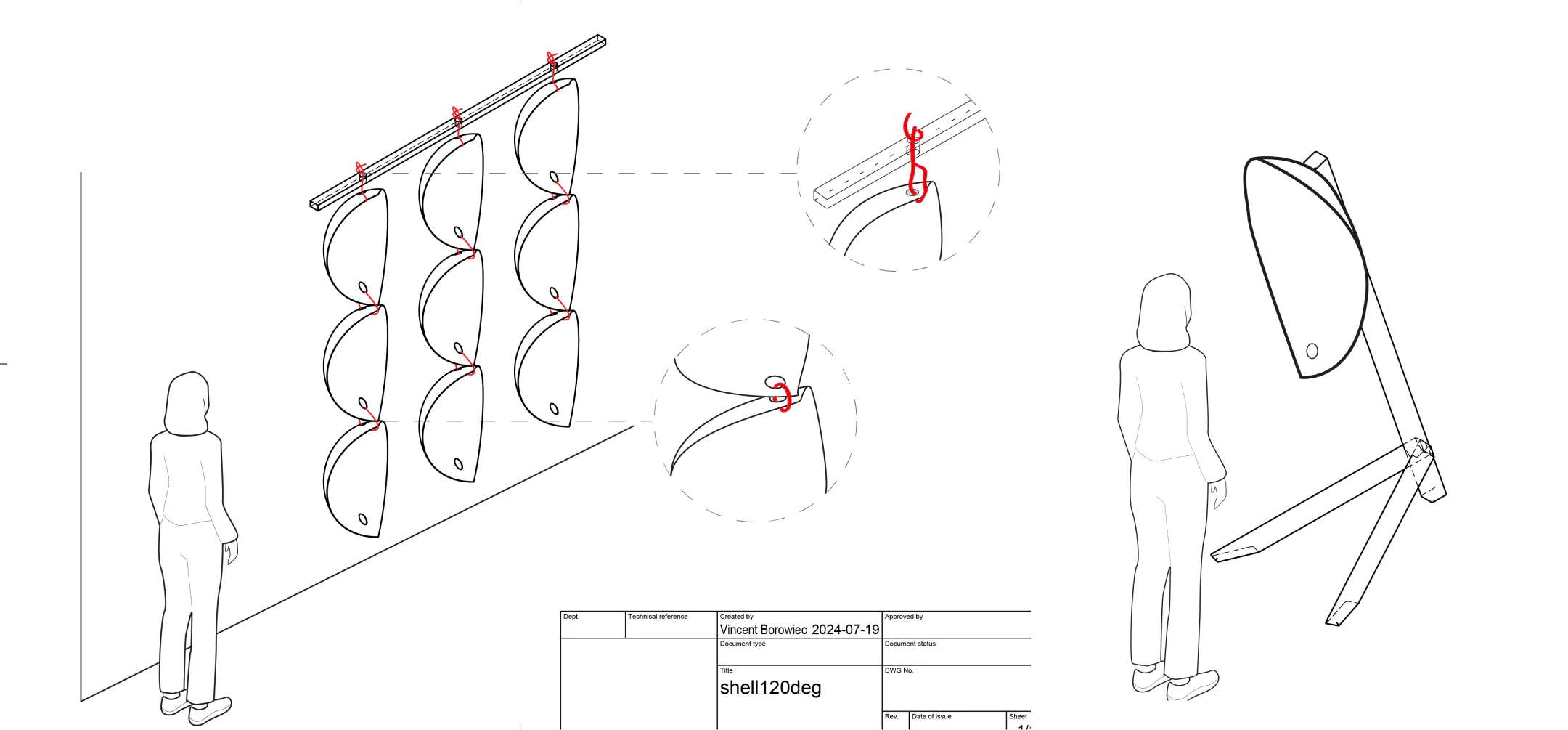
The final product is a sound-absorbing panel that combines the natural acoustic properties of bio-based materials with a modern, minimalist design. The panel integrates easily into a variety of indoor spaces, providing both functional and environmental benefits. Its use of renewable resources like horse chestnuts and hemp, coupled with its recyclable nature, makes it an environmentally friendly alternative to traditional soundproofing solutions.
Reflection
This project illustrates the promising potential of bio-based materials derived from renewable resources, but it also highlights some of the challenges and limitations of using such materials in product design. One key insight from this project is the seasonal availability of horse chestnuts, which limits consistent production. Additionally, regulatory and logistical hurdles make large-scale usage difficult. The threat of diseases such as the bleeding canker raises further concerns about long-term sustainability when relying on this specific material. On a technical level, while the materials demonstrated effective sound absorption and aligned with user preferences, there were notable limitations, such as their vulnerability to water and fire. This suggests that further refinement of the materials is necessary for broader applications, including adding treatments for durability. The project revealed how user testing can validate design assumptions, though I recognize that the initial testing could have benefitted from a more diverse and randomized sample. Users responded favorably to the combination of wool and horse chestnut, perceiving it as natural and calming. However, the hemp-based material was met with hesitation due to its unfamiliarity, which created a valuable learning moment about user perception of novel materials. Although biomimicry was not an initial focus, it naturally became an inspiration during the ideation phase, shaping the product’s form and function. While this approach added value, it’s clear that biomimicry alone cannot address all sustainability concerns—it needs to be considered alongside other ethical and environmental factors. In conclusion, this project exemplifies how material-driven design can push the boundaries of renewable resources in product development. The use of hemp and wool fibers, combined with horse chestnut starch, created a material that could serve as a foundation for further exploration in sound-absorbing products. This study also underscores the importance of integrating life cycle assessments (LCA) and user feedback to address both the environmental and functional aspects of product design, driving innovation toward a more sustainable future.
Written in collaboration with ChatGPT-4