Recharge
E-bike charger
Introduction
In an era where sustainable transportation solutions are gaining increasing importance, and with a profound shift towards eco-conscious commuting, the Swedish market for electric bicycles has grown over the past few years. As the users in our research had a tendency to disconnect the charging cable improperly, leading to cable breakage and the need for maintenance, the availability of electric cargo bikes has been hindered. Several of the users over our two week research period expressed the need for a new charging solution, as one of their many painpoints were the unavailable of the cargobike due to maintence.
Ideation
In the early stages of ideation, when ideas are still fresh and fragile, a highly intuitive workflow that prioritizes quantity over quality can be incredibly beneficial. This approach encourages rapid exploration and experimentation, fostering a fertile ground for creative breakthroughs. The process resembles a continuous dialogue between the designer, the material, and the emerging form. Each iteration informs the next, creating a dynamic feedback loop that drives the design forward. This iterative cycle mirrors Bill Buxton's notion of sketches, where ideas are constantly refined through the act of drawing and redrawing. As the designer moves through this iterative process, a sense of Gestalt emerges – the perception of a whole that is more than the sum of its parts. The design coalesces into a cohesive and meaningful concept, born from the fertile soil of unrestrained experimentation.
Workshop
This intuitive workflow, with its emphasis on quantity over quality, empowers designers to tap into their intuitive creativity and explore the vast expanse of possibilities that lie dormant within their minds. It fosters a sense of freedom and abandon, allowing ideas to blossom without the constraints of self-judgment or over-editing. In essence, this approach encourages designers to embrace the messy, unpolished nature of early ideation, recognizing that it is within this rawness that truly novel and innovative concepts can emerge. By giving form to these ephemeral ideas, designers can nurture the seeds of creativity and transform them into tangible design solutions. The process of developing a new charging solution got started with me heading out to the workshop after the inital research and brainstorming period with the design team. One of the possible solutions we had agreed upon was the idea of offering wireless charging. This could mitigate the risk for maintance periods as we had noted that this was one the users many painpoints.
Prototyping
As the initial ideation phase gave way to the hands-on process of prototyping, my focus shifted towards the structural elements of the charging solution. Working with physical materials provided a more holistic understanding of the design than low-fidelity sketches and models. Equipped with leftover scrap material from the workshop, I began assembling the components, carefully gluing them together to create a stable and secure structure for the charger. During this process, I discovered the aesthetically pleasing texture of corrugated paper, which inspired me to incorporate a similar texture into the final design. This could be achieved through the extrusion process, a manufacturing technique that involves shaping molten plastic into various forms. The incorporation of corrugated paper into the charging solution not only enhanced its aesthetic appeal but also served a functional purpose. The ribbed structure of corrugated paper provided additional rigidity and strength, ensuring that the charger could withstand the weight of various devices without compromising its stability. This tactile element added a layer of intrigue to the design, inviting users to interact with the charger and appreciate its unique texture. The interplay of form and function created a harmonious balance, ensuring that the charging solution not only performed flawlessly but also offered a visually appealing and aesthetically pleasing experience. By bridging the gap between low-fidelity prototypes and high-fidelity design, I was able to refine the charger's structural integrity while incorporating a distinctive textural element that enhanced its visual appeal and user experience. This holistic approach to design ensured that the final product not only met functional requirements but also exuded a sense of craftsmanship and elegance.
CAD
In this project, I utilized Fusion 360 for all the computer modeling tasks. The Dev’s robust suite of tools allowed me to create precise and detailed 3D models that aligned with the project specifications. Throughout the modeling phase, I made various alterations to refine the design, ensuring it met both functional and aesthetic requirements. These modifications included adjusting dimensions, tweaking shapes, and experimenting with different design elements to achieve the optimal outcome. Fusion 360’s parametric modeling capabilities were particularly helpful in making these adjustments efficiently, as they allowed for quick iterations and easy updates to the model.
Animation
For the animation phase of the project, I used Blender, which offered a powerful platform for creating dynamic and visually compelling animations. I began by importing the 3D models into Blender, ensuring that all elements were properly aligned and textured for the animation process. Throughout the project, I utilized Blender’s robust toolset to rig the models, allowing for smooth and realistic movement. I then set up keyframes to define the motion of each element, carefully adjusting the timing and transitions to create a fluid and engaging animation. Various alterations were made during this phase, including tweaking the movement paths, refining the lighting, and adjusting camera angles to enhance the overall visual narrative.
Indicator
Eliminates the need for users to fumble with cables and provides a seamless user experience. It's as simple as parking your e-bike underneath the wireless charging pad, and the charging process begins automatically. This effortless approach encourages more people to adopt e-bikes as a convenient mode of transportation. The charging indicator offers a visual cue to let you know when your device is actively charging.
Material
The decision to use recycled aluminum as the body of the charger is due to its recyclability and weather resistance. Choosing recycled over virgin can decrease carbon emissions by reducing the need for mining and refining new bauxit. The material can be recylced at end of product lifetime. While the process of remelting scrap aluminum saves resources and reduces energy consumption, mixing different alloys can compromise its properties compared to virgin material. To preserve the superior characteristics of aluminum, it's essential to segregate various grades during recycling. This segregation process ensures that each alloy is recycled separately, preventing the introduction of impurities that can alter the material's strength, malleability, and resistance to corrosion. By maintaining the purity of each grade, recycled aluminum retains its exceptional qualities, making it an ideal choice for a circular economy.
Conclusion
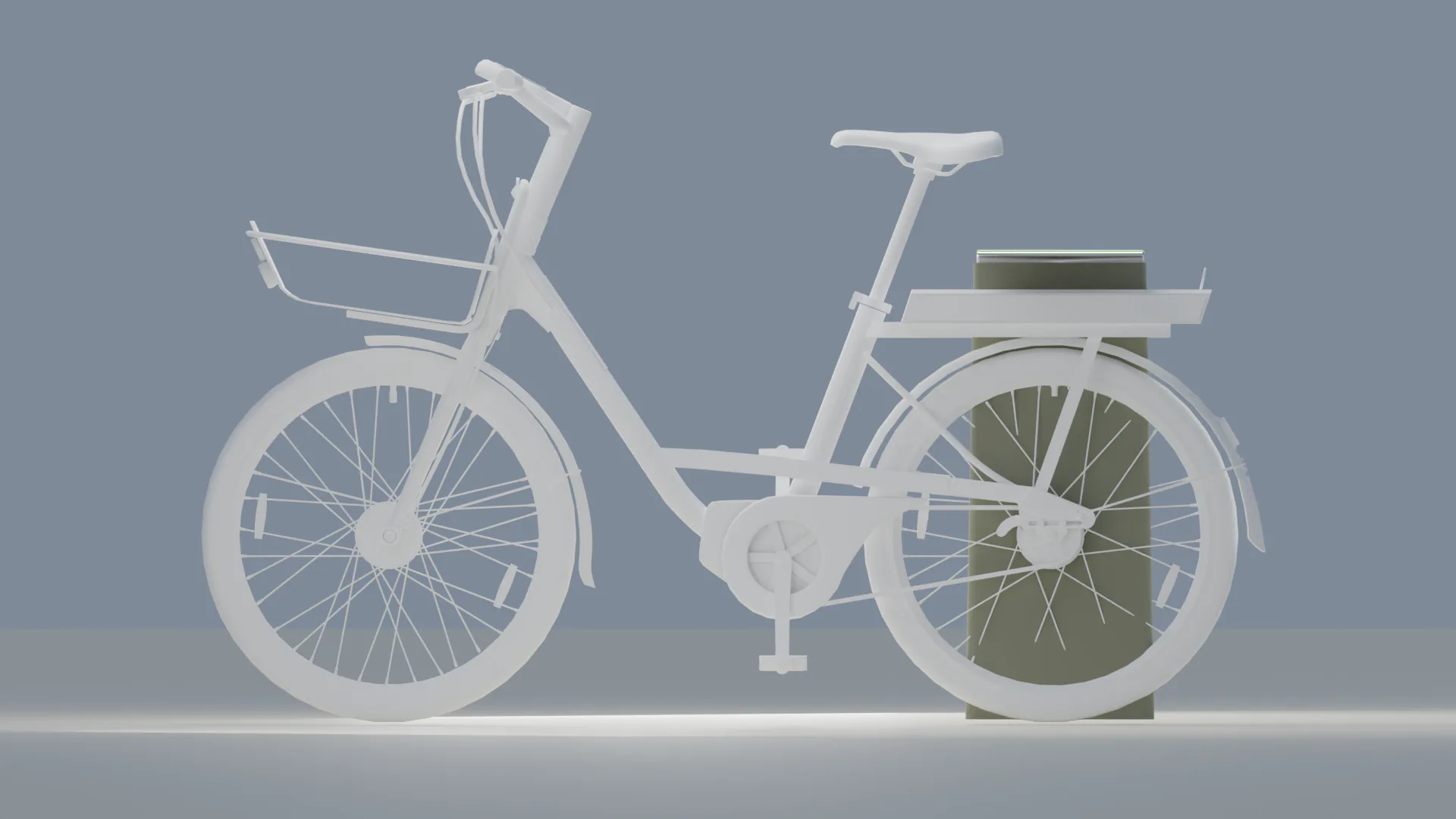
The journey of designing and developing a wireless charging solution was a transformative experience that challenged me to think creatively and sustainably. From the initial ideation phase to the final prototype, I remained committed to minimizing the use of materials while maximizing the product's functionality and aesthetic appeal. By embracing an iterative design process and continuously refining my prototypes, I was able to develop a wireless charging solution that not only addressed user needs but also the environment. The final design, with its minimal footprint and sleek form, embodies the essence of sustainable design, demonstrating that form and function can coexist harmoniously. The render showcases the evolution of the wireless charger from its initial concept to the final realization, highlighting the iterative process that led to its development. Each iteration represents a step towards a more refined and sustainable solution, demonstrating the importance of continuous improvement in the design process.The wireless charger's final form, characterized by its minimalist design and use of recycled materials, epitomizes my commitment to sustainable design principles. It stands as a testament to the belief that innovation and sustainability can go hand in hand, creating products that are not only beneficial to users but also environmentally responsible. In conclusion, the wireless charging solution represents a successful fusion of form, function, and sustainability. It is a product that not only addresses user needs but also sets a new standard for sustainable design, demonstrating that eco-consciousness can be a driving force behind innovation and creativity.
Reflection
Designing through physical prototyping was a crucial process as it provided a multi-sensory and three-dimensional understanding of the product that only digital renderings cannot match. Physical models allowed me to engage with a product's tactile qualities, spatial relationships, and structural elements, helping me uncover unforeseen issues and create more intuitive, user-friendly designs. Furthermore, physical prototypes serve as effective tools for communication and collaboration within design teams and with stakeholders, ensuring a more comprehensive and refined design process. The design process naturally proceeded by creating a few CAD models and rendering them to show the team. Making CAD models and renders usally takes place later but would prove to be a benefitital as it was during this period that we would generate new improved features.